A controversial new migration law rushed through federal parliament has sparked fierce political backlash after giving Australia’s Home Affairs Minister sweeping powers to stop groups of temporary visa holders from entering the country—even if they already hold valid visas.
The Migration Amendment (2026 Measures No. 1) Act 2026 passed both houses of parliament on 12 March and received Royal Assent on 13 March, allowing the government to impose temporary travel bans on certain groups of visa holders before they arrive in Australia.
The law introduces a new mechanism known as an “arrival control determination,” enabling the minister to prevent groups of temporary visa holders from travelling to Australia if overseas events create concerns they may seek to remain in the country beyond the terms of their visas.
The legislation was introduced to the House of Representatives on 10 March, triggering immediate political controversy.
What the new law allows
Under the legislation, the Minister for Home Affairs can issue an arrival control determination affecting a defined group of visa holders if satisfied that an “event or circumstance” overseas means visa holders in the group may seek to remain in Australia once they enter, and that making the determination is in the “national interest.”
The power can be exercised personally by the minister and without prior notice to the visa holders who would be affected.
Once issued, the determination automatically ceases the temporary visas granted to people within the designated group, meaning they are no longer permitted to enter Australia.
The measure can apply at any time before a visa holder enters the country, including while they are travelling or in transit through another country.
Arrival control determinations can operate for up to six months at a time, but can be renewed indefinitely if the minister considers it appropriate.
The legislation also allows the minister to apply the determination differently to particular groups—for example, by exempting certain visa holders.
While the determinations must be tabled in parliament, they are not subject to disallowance, meaning they cannot be overturned in the same way as many other legislative instruments.
Who is exempt
The law does not apply to several categories of people.
Arrival control determinations cannot be made in relation to:
-
People who hold Protection or Humanitarian visas, or bridging visas linked to protection visa applications
-
Individuals who have already entered Australia
-
Immediate family members of Australian citizens or permanent residents, including spouses, de facto partners, dependent children and parents of dependent children
Minister can grant exemptions
The legislation also introduces a system allowing the minister to exempt individual travellers through what is known as a “permitted travel certificate.”
Through this mechanism, the minister can allow specific people affected by an arrival control determination to travel to Australia if satisfied that doing so is appropriate in the circumstances.
People subject to the travel ban can request a permitted travel certificate, but the minister is not required to consider or grant the request.
Government defends the changes
The Albanese government has argued the new powers are necessary to respond quickly to changing global events.
Introducing the legislation, Assistant Minister for Citizenship and Multicultural Affairs Julian Hill said the measure was designed to protect the integrity of Australia’s migration system.
“At any point in time, there are many temporary visa holders outside Australia holding a temporary right of entry to Australia, granted to support travel for a genuinely temporary purpose, like a holiday or attending a conference,” Hill told parliament.
“The current situation in the Middle East demonstrates how quickly circumstances can change that may impact whether those temporary visa holders could fulfil that temporary purpose in Australia, including whether they would leave Australia should they travel here.”
“In these circumstances, it is vital that government can respond appropriately, including by placing temporary limitations on the ability of certain cohorts and noncitizens from travelling to Australia without legislative change.”
Visa holders in the Middle East under scrutiny
According to evidence provided to parliament by the Department of Home Affairs, tens of thousands of temporary visa holders are currently located in the Middle East.
Officials told a parliamentary hearing that around 7,200 Iranian citizens currently hold Australian temporary visas, while more than 40,000 temporary visa holders are located across the broader region.
While the law does not name any specific country, government briefing documents circulated to MPs referenced the situation in the Middle East as an example of the type of circumstances that could trigger the new powers.
Thorpe labels proposal a “racist dog whistle”
Independent Victorian Senator Lidia Thorpe strongly condemned the legislation when it was introduced to parliament, accusing the government of pursuing discriminatory migration policies.
“Who is coming up with this stuff? Is One Nation writing Labor’s migration policies now?” Thorpe said.
“This move from Labor looks eerily similar to Donald Trump’s Muslim ban.”
Thorpe warned the powers could disproportionately target minority communities.
“It’s a racist dog whistle that will target Black and brown people. It looks like Labor wants to drag this country back towards the days of the White Australia policy,” she said.
“This proposal would give sweeping powers to the minister to block entire groups of visa holders from travelling to Australia on suspicion alone, even when they have legitimate reasons to be here.”
“Powers like this will quickly be weaponised against Black and brown people, who are always treated as suspect.”
Thorpe also argued the powers would likely be applied selectively.
“We know these powers won’t be used to stop people from places like Israel or Ukraine if they seek refuge in this country,” she said.
“They will be used against Muslim and Arab people being displaced by the United States and Israel’s illegal attacks in Iran and elsewhere — conflicts the Albanese government continues to back.”
“We cannot allow Australia to slide further down this dangerous path. Racist migration policies have no place in this country.”
Critics warn of humanitarian impact
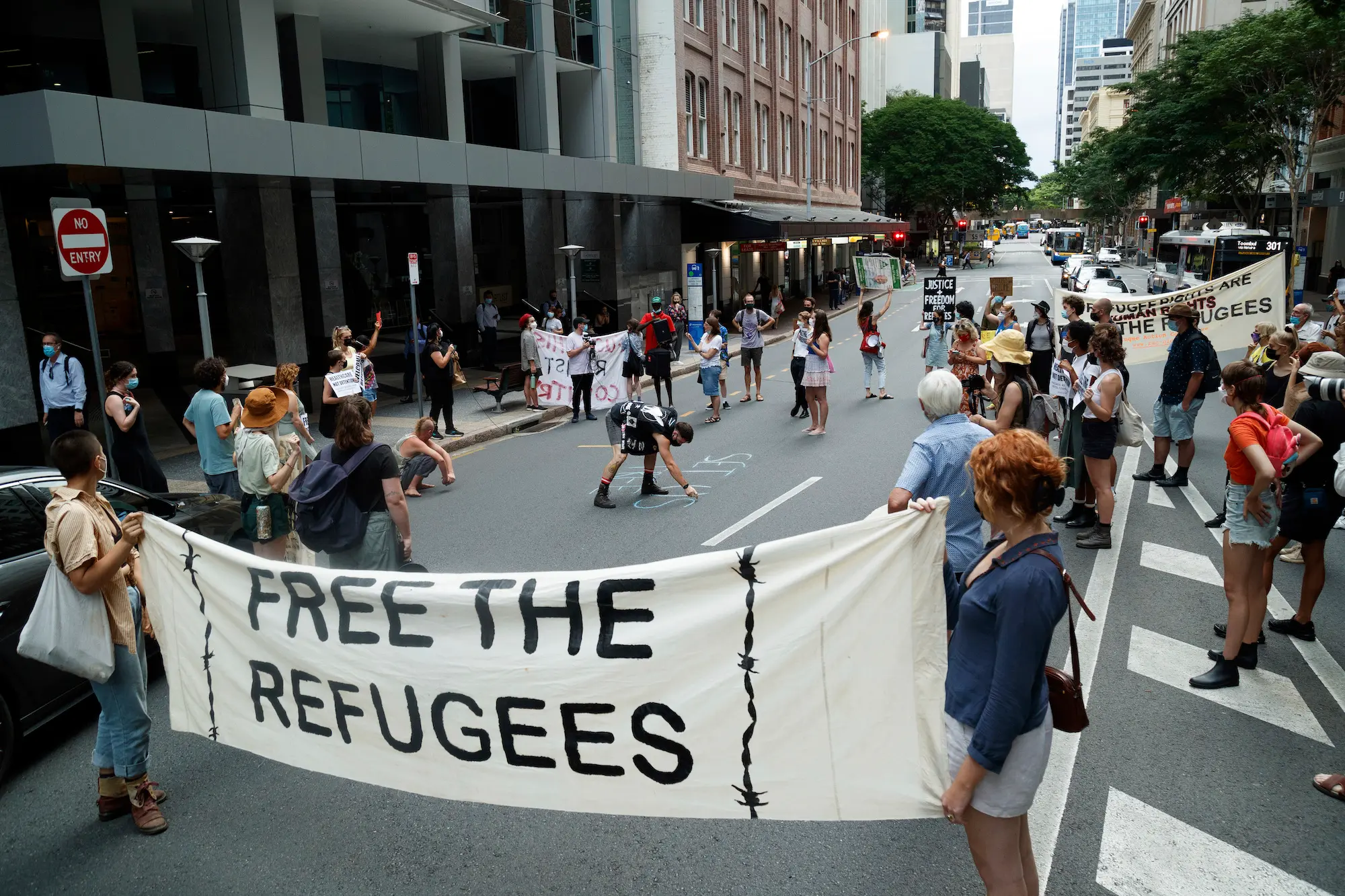
Other critics, including refugee advocates and some crossbench MPs, have also raised concerns the new powers could prevent people fleeing conflict from reaching Australia to seek protection.
Independent MP Zali Steggall said she believed there were insufficient safeguards built into the legislation.
Greens leader Larissa Waters also criticised the law, arguing it could prevent people displaced by conflict from travelling to Australia.
A major shift in migration powers
The law allows the government to act when overseas developments create concerns that groups of temporary visa holders may seek to remain in Australia beyond the intended duration of their visas.
The types of overseas events that could trigger the powers are not specifically defined in the legislation and could include geopolitical conflict, political upheaval or other major international crises.
For critics, that breadth raises questions about how widely the powers may be used in the future.
For the government, however, the new law represents what it describes as a necessary tool to protect the integrity of Australia’s immigration system during periods of global instability.